

Steven Arciniega
Content Strategist—Office of Strategic Marketing and Communications



Jul 16, 2026
As COVID-19 forced communities indoors and online, University of Redlands School of Business & Society (SBS) Professor James (Jim) Pick saw firsthand something he’d spent 15 years trying to understand.
“We were seeing disruption of what was known about the digital divide (the gap between those who have access to technology, the internet, and digital literacy training, and those who do not) — people who hadn’t used the latest technologies were being forced to use them,” he said.
From young children moving to online classrooms overnight, to the elderly adapting to digital health information, to high-tech workforces like U of R’s neighboring Esri moving to remote work — the pandemic provided a rapid acceleration of the digital divide.
Recognizing the moment, Pick, along with longtime collaborator Professor Avijit Sarkar, Professor Fang Ren, and with assistance from a group of graduate student research assistants from SBS, began a conversation during the COVID lockdown about studying how digital inequality was being reshaped around the globe. The result was their new book, “Global Digital Divides in the COVID-19 Era,” an examination of data from more than 130 nations about how the pandemic reshaped the gap between those who can fully participate in a digital world and those who cannot.
In his previous research, Pick measured the digital divide by who had access to the internet. The new book, published by De Gruyter Brill, reframes that thinking by introducing the concept of “purposeful use” — measuring, through data, how people use technology and the opportunities it creates for them. Those with an internet connection may still lack the skills or the means to access online banking, utilize e-commerce, or adapt to emerging technologies like artificial intelligence (AI).
“It's not just use or non-use,” Pick said. “It's what you're doing with it, and whether those opportunities are even available to you.”
To understand these differences, Pick and the research team drew on major international data sources including the World Bank, the International Telecommunication Union, and country censuses — though data collection wasn’t always straightforward or in one instance, didn’t exist.
For example, while researching India, the team discovered that the country’s 2021 census never took place, and the next one is not expected until 2028. To fill the gap, the team manually gathered data from roughly 30 separate branches of the Indian government — producing what Pick describes as a completely unique dataset.
“What we've published on India is completely unique,” he said. “The methods we used were unusual in the sense that we combined statistical analysis to see what the relationships were to the digital divide with other variables. We also did mapping and spatial analysis of the data and looked at how those complemented each other.”
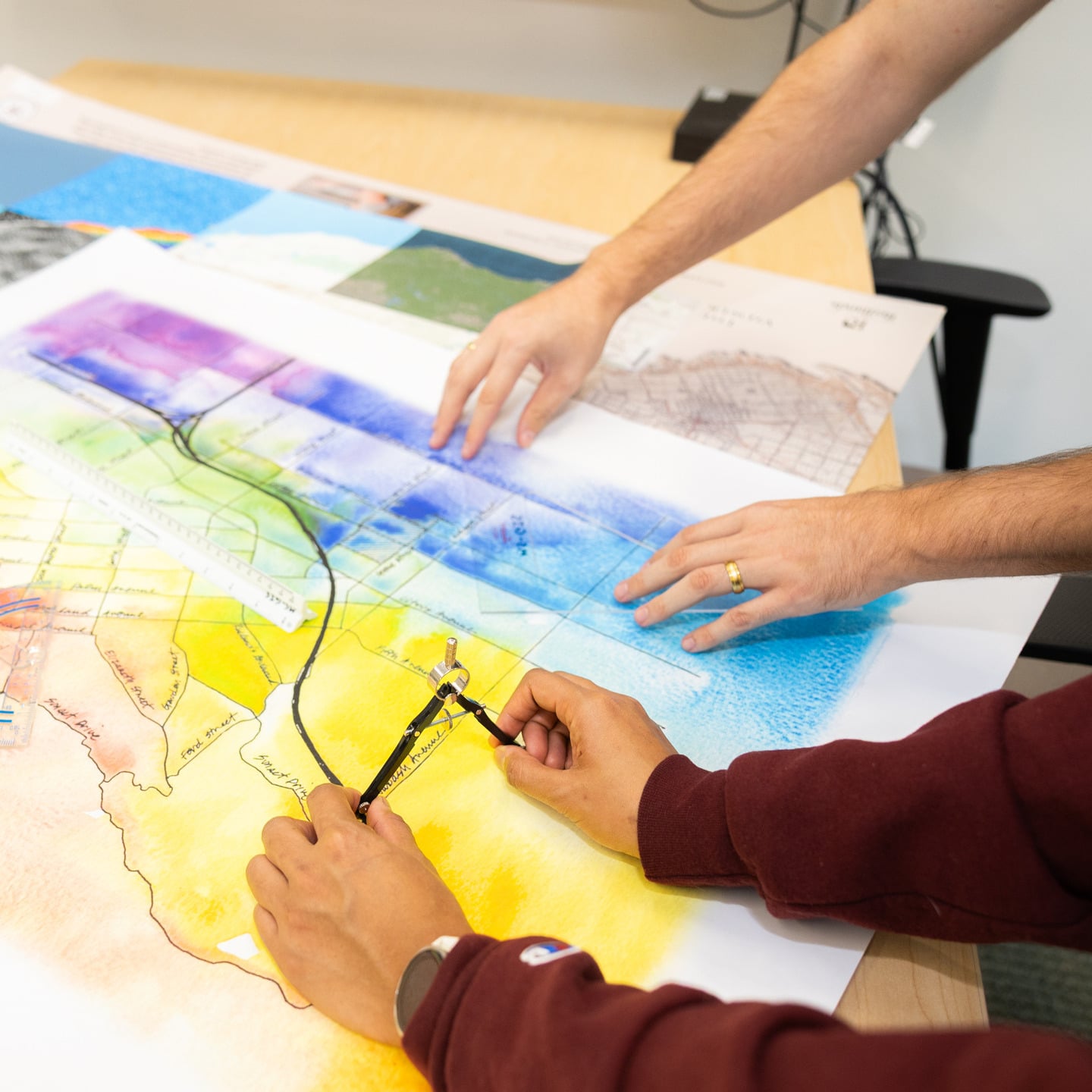
What separates “Global Digital Divides” from conventional research is its use of spatial analysis — combining GIS techniques with statistical findings to reveal patterns that data tables alone can't show.
“If you just have an Excel table, you don’t have any idea of where,” he said. “When you see a map visualization, you can grasp the geography of what’s happening much more readily.”
Employing this type of spatial analysis revealed one of the book's most striking findings: the global divide in artificial intelligence (AI) adoption is sharper than nearly any other technology. Despite expectations that usable data would be scarce, the team found AI-related data for 135 nations, including 54 nations in Africa.
“It’s important because there’s so much hype about AI that having the data makes it realistic and actual as to what is happening,” he said. “China and the U.S. are at the top, and most countries are far below. It was a very wide divide — and it was unexpected.”
Pick pushes back firmly on the idea that smartphones have made the digital divide a thing of the past. Access, he argues, is only part of the story.
“It comes down to skills, cost, and purposeful use,” he said. “Those differences are widening — not narrowing."
The book's nine case studies — spanning India, China, Mexico, the U.S., and beyond — put human faces on that argument, translating global data into real-world stories of communities navigating an unequal digital landscape.
As AI, digital services, and remote work become more central to daily life, Pick believes understanding those divides has never been more important.
Rather than serving as the conclusion of his research, “Global Digital Divides in the COVID-19 Era” lays the groundwork for the next generation of research on digital equity — providing new tools for policymakers, researchers, and educators to understand how technology is reshaping opportunity around the world.
Discover the Institute for Geospatial Impact and the Center for Spatial Business at Redlands.