
Jennifer Kaplan
Presidio Faculty Member


Nov 7, 2026
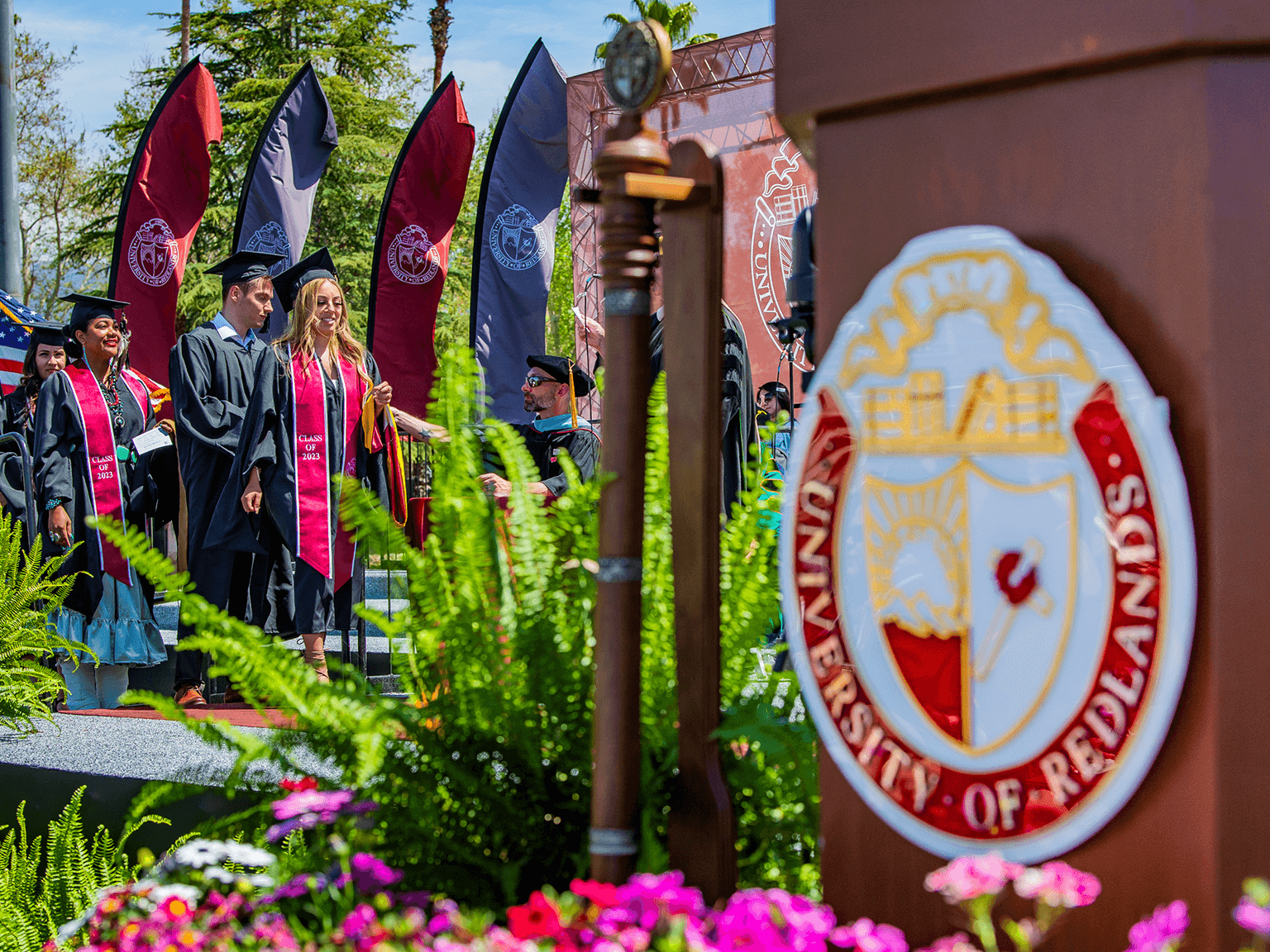
Commencement is one of my favorite times of the year at Presidio. Last year, keynote speaker and General Manager at Patagonia Provisions Paul Lightfoot warned about the “hedonic treadmill”: the pursuit of achievement, money, and status that can leave people disconnected from meaning. He argued that sustainability without truth is meaningless and challenged us to look beyond values that exist only in a company’s marketing.
This year, speakers returned to a related question: What kind of future should business education help create?
Student speaker Alex Bogdan described arriving at Presidio believing in “something radical — business doesn’t have to extract. It can restore.”
University of Redlands Dean Jennifer Madden challenged graduates “not to inherit the world as it is, but to participate in what it is becoming,” describing them as “stewards of transformation.”
Student speaker Declan Durand drew on the history of the Presidio as a military fort built to protect something valuable.
“This group knows what it is protecting,” he said. “Nowhere else in my life have I found a community of individuals that will so reliably push each other not just to master the skills and the tools and the practices of modern business. But also to ask, what are we missing? Who is hurt by this decision? What voices are we not considering?”
His words reflected what I saw in the classroom. Students questioned whether the systems they were learning to navigate produce burnout, inequity, ecological collapse, loneliness, and disconnection from meaning. They were willing to sit with uncertainty and keep engaging.
Keynote speaker Kelly Jones gave that uncertainty another dimension. Referencing Rebecca Solnit, she reminded graduates, “Hope locates itself in the premise that we don’t know what will happen.” She also described hope as “room for doubt.”
That idea resonates at a time of climate anxiety, economic uncertainty, misinformation, democratic erosion, and rapid advances in AI. My students have wrestled with how to preserve humanity in systems increasingly driven by automation and optimization. They continue to engage, even without easy answers.
Student speaker Andrew Wells recalled wondering whether he was receiving a “good education” because Presidio wasn’t Harvard or Stanford. Over time, he came to value a deeper set of questions: “What are my values? What do I care about? Why is this important to me?”
Those questions echo Presidio’s founding educational philosophy, articulated by Ron Nahser and Dwight Collins: business education should help students discover their calling, not just their career. They have also shaped discussions in my Marketing & Communications for Social Impact course.
Over 16 weeks, students examined companies that abandoned sustainability pledges or retreated from DEI commitments under pressure. Again, they returned to the same insight: mission is easy when it’s profitable. The test comes when it costs something. One student called purpose a “fair-weather identity”—visible when advantageous and abandoned when inconvenient.
What struck me was their discernment. They looked beneath marketing claims to examine governance, incentives, tradeoffs, and accountability. They still believe business can be a force for good, but they want evidence—and they are ready to participate in the work.
These graduates are redefining success. The challenge for business schools is whether we will prepare students simply to compete in the world as it exists or help them protect what matters while building something better.
Originally published in OnPurpose! Read the original post and subscribe at: onpurposing.substack.com/p/what-are-business-schools-protecting