
Steven Arciniega
Content Strategist—Office of Strategic Marketing and Communications



Feb 27, 2026
“I’m trying to shape educators to be in a world, in a space, in a community where they’re servicing students and showing up for them to make an impact on their life."
Belize didn’t just invite Dreana Holloway to teach — it invited her to lead. When the School of Education professor was asked to help guide the country’s national school counseling training, she stepped into a rare role: shaping how an entire system supports its students. What began as a single training quickly evolved into infrastructure-building work with national impact — the same leadership she brings to preparing future counselors in Redlands.
“This is the type of moment I’ve been waiting for; I’ve always wanted to be in a space where I’m training school counselors and leading,” she said. “Belize school counselors don’t come in with the education we have in the United States. They needed a different framework compared to the one used for my U of R students.”
Since 2023, Holloway, who also serves as the director of the Center for Educational Justice, has worked closely with Belize school counselors, analyzing national performance appraisal data to identify areas of strength and growth. This early work was at the center of her field training last summer, where she helped Belizean school counselors establish foundational skills and floated the idea of a peer group supervision (PGS) model that would enrich the country’s educators.
“During the training, I pitched the idea of peer group supervision to beginning school counselors and a representative from the Ministry of Education,” she said. “The Ministry representative expressed strong interest and saw the potential to expand the model beyond school counselors to teachers. After consulting with the Chief Officer of Education, I was approved to move forward with implementing the PGS infrastructure.”
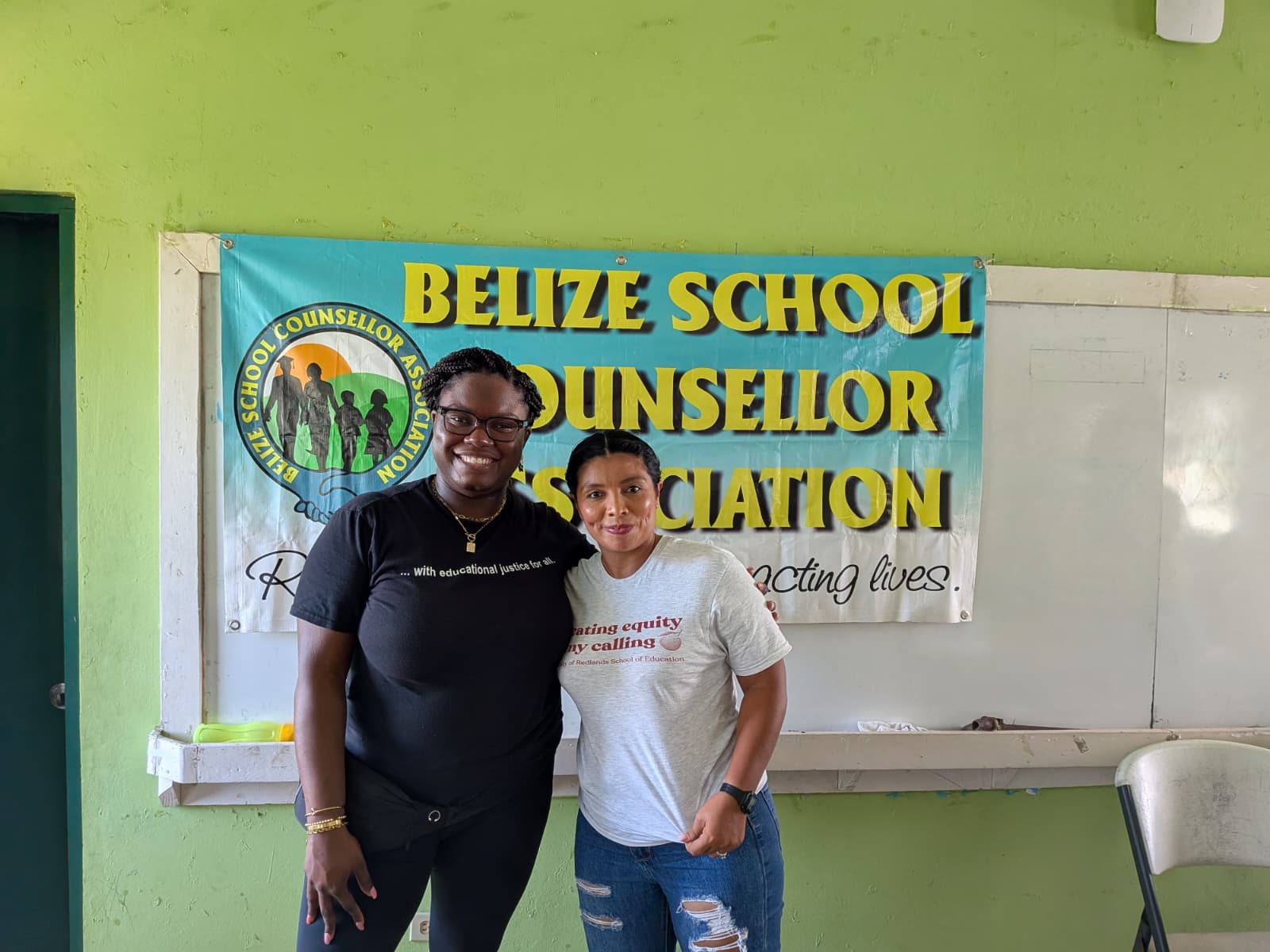
The approval led to Holloway becoming a consultant for the Ministry of Education for PGS and to working on a foundational skills certificate program for Belize school counselors. This personalized effort to educate educators reflects her work in Belize, where she recently spearheaded the launch of the first-ever course within the Belize School Counseling Certification Program.
“This initiative represents the inaugural certification program specifically designed for school counselors, filling a critical gap in structured, specialized training for professionals working to support student success,” she said.
The course, intentionally designed to mirror the real-world demands witnessed during her time in Belize, emphasizes comprehensive program development, data use, and equity-driven practice, reflecting the growing recognition that school counselors play a critical role in student success.
“I’m trying to shape educators to be in a world, in a space, in a community where they’re servicing students and showing up for them to make an impact on their life,” she said.