Steven Arciniega
Content Strategist—Office of Strategic Marketing and Communications



Jul 15, 2025
Inside Professor Kathy Feeley’s U.S. Civil War and Reconstruction seminar, history doesn’t stay confined to the page—it comes alive through archived letters, census maps, and preserved quilts. Partnering with the A.K. Smiley Public Library and Lincoln Memorial Shrine, this University of Redlands course invites students to explore not only the facts of what happened, but how the Civil War has been remembered, contested, and reinterpreted over time.
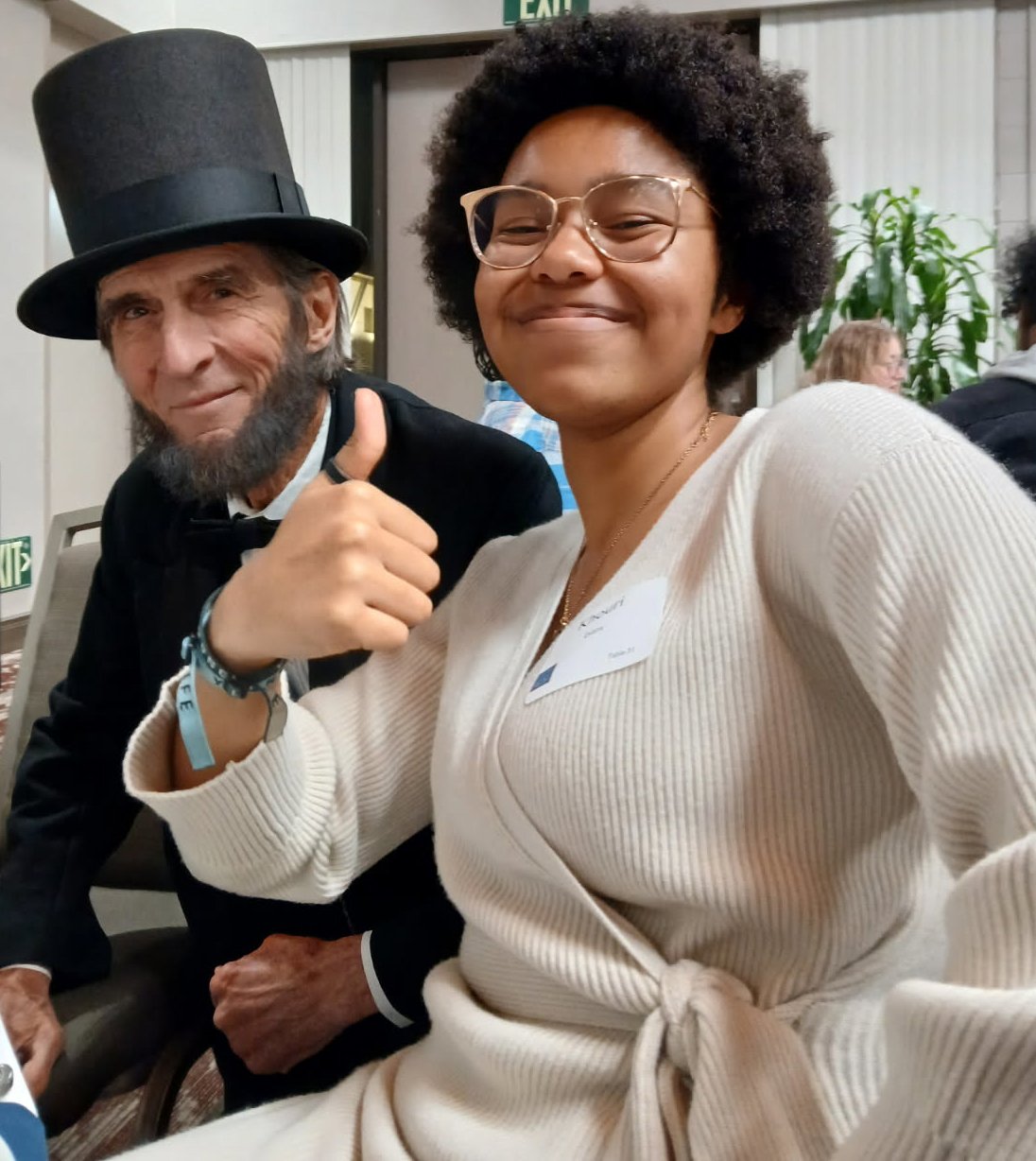
As a longtime board member of the Shrine, Feeley helps steward the decades-old town and gown relationship between U of R and the library. This past May Term, students Khouri Evans ’27 and Addison Sheble ’26 carried that legacy forward, earning the Watchorn Prize in Civil War Studies for their original research into the era’s unresolved questions and enduring impact.
“This award is an opportunity to recognize student’s work, amplify the collaboration between Town and Gown, the Lincoln Memorial Shrine, and the A.K. Smiley Public Library, and creates opportunity for student success through original research,” Feeley said. “The Shrine presents an unprecedented opportunity for undergraduate students to access a Civil War archive that is part museum, part research center, and offers high quality and freely available material.”
This unique opportunity allowed Evans, a history and GIS double major, to investigate antebellum federal legislation from 1820 to 1860 and its influence on slavery’s expansion and emancipation. Using mapping tools and historical census data, she traced how political compromises and territorial disputes fueled divisions that ultimately led to war, and how similar patterns echo in today’s political debates.
“Few people realize how divided America was before the Civil War, and I wanted to figure it out,” she said.
Evans focused on debates like extending the Missouri Compromise Line westward, revealing how federal laws often sidestepped confronting slavery directly, blocking some extreme measures while allowing discriminatory loopholes. She drew parallels between these legislative evasions and later injustices, from Jim Crow laws to modern policies that disguise bias under legal technicalities.
“When the Missouri Crisis happened, the government didn’t let Missouri explicitly ban all free Black people, but it did allow vague definitions of citizenship that enabled discrimination,” she said. “The same pattern reemerged under Jim Crow and still surfaces today. You never realize how much of the past is alive in the present until you see the same patterns playing out.”
The course opened with a conversation about Confederate monuments in today’s context and whether the structures preserve history or celebrate those involved. Sheble, a history and political science major, drew inspiration from the conversation to explore the lasting cultural impact of the “Lost Cause” narrative, a concept born in the aftermath of the war that downplayed the institution of slavery by emphasizing the technological disadvantages of the South.
“Many people believe that the end of the Civil War resulted in the total freedom of formerly enslaved peoples, which was not the case, as they extended far beyond into systems like apprenticeship programs, vagrancy laws, and later the institution of Jim Crow,” he said.
Now a summer intern at the A.K. Smiley Library, Sheble is continuing his work in public history, this time behind the scenes helping to preserve the archives that helped shape and conduct his research.
“I’m currently working on a project involving the Redlands Chinatown exhibit that will be added to the new Museum of Redlands, set to open in the fall of 2025,” he said. “The project deals with the Chinese Exclusion Act and its impact on Chinese immigrants in Redlands. Preserving history that will later be on display helps future generations become informed citizens.”
For both students, the seminar has offered the opportunity to collaborate, question, and uncover. As Evans put it, “It was the best history course I’ve taken at Redlands. It challenged me to understand the past on my own terms but with real guidance and purpose.”
Learn how Redlands helps students connect to the past—discover History at University of Redlands.